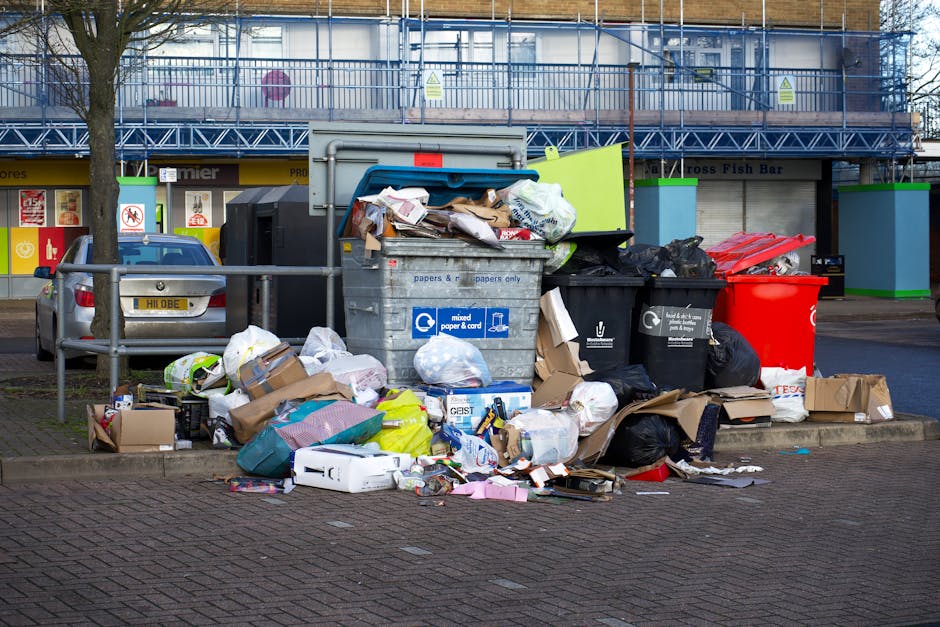
Real cost rubbish removal versus skip hire Gerrards Cross: what you actually pay, what you get, and how to choose wisely
If you are comparing real cost rubbish removal versus skip hire Gerrards Cross, you are probably trying to answer a very practical question: which option is cheaper once everything is counted in? Not just the headline price, but the hassle, the time, the access issues, the permits, the loading effort, and the moments where a quote suddenly grows teeth. Let's face it, rubbish never seems to be only rubbish. It is furniture, broken bits of timber, bagged waste, old garden stuff, and the awkward pile in the corner that has been bothering you for weeks.
This guide breaks the choice down in plain English. You will see where rubbish removal can save money, when a skip can make sense, and how to judge the real cost rather than the sticker price. If you want a cleaner, simpler route for a house, flat, garden, loft, garage, or business premises, it also helps to know what local clearance services actually cover, such as waste removal, house clearance, and builders waste clearance.
Table of contents
- Why Real Cost Rubbish Removal versus Skip Hire Gerrards Cross Matters
- How Real Cost Rubbish Removal versus Skip Hire Gerrards Cross Works
- Key Benefits and Practical Advantages
- Who This Is For and When It Makes Sense
- Step-by-Step Guidance
- Expert Tips for Better Results
- Common Mistakes to Avoid
- Tools, Resources and Recommendations
- Law, Compliance, Standards, or Best Practice
- Options, Methods, or Comparison Table
- Case Study or Real-World Example
- Practical Checklist
- Conclusion
- Frequently Asked Questions
Why Real Cost Rubbish Removal versus Skip Hire Gerrards Cross Matters
The difference between rubbish removal and skip hire is not just about price per job. It is about how much time, labour, convenience, and risk you are buying along with the disposal. In Gerrards Cross, where homes can have tight drives, shared access, parked cars, and the occasional awkward frontage, the way waste is collected can matter as much as the waste itself.
A skip might look cheaper at first glance. You can fill it over a few days, which is handy for a long project. But if you need a permit, if the skip blocks access, if the waste is heavy, or if you overfill it, the total can climb quickly. That is the bit people miss. The quote looks tidy; the reality, not always.
Rubbish removal, by contrast, often prices in the labour of loading, the vehicle, and the disposal in one go. For many people, that makes the real cost easier to understand. If you are clearing a loft in a hurry, dealing with bulky furniture, or just want the mess gone before the weekend, the time saved can be worth more than a small difference in headline cost.
Expert summary: The cheapest option on paper is not always the cheapest overall. In practice, the real cost depends on access, loading effort, permit needs, waste type, and how quickly you need the space back.
There is also the human side. A skip sitting outside the house for a week can be a nuisance. You hear people climbing in and out. You keep glancing at it. You wonder if someone else will dump extra rubbish in it after dark. Most of us would rather not babysit a metal box, to be fair.
How Real Cost Rubbish Removal versus Skip Hire Gerrards Cross Works
The two services solve the same problem in different ways.
Rubbish removal
With rubbish removal, a team comes to your property, loads the waste for you, and takes it away in one visit or a small number of visits. You typically pay for the amount removed, the labour required, and any special handling. This suits people who do not want to do the lifting themselves or who need a fast turnaround.
Skip hire
With skip hire, a skip is delivered to your address, you fill it yourself, and then it is collected later. This can suit longer jobs where you are generating waste in stages, like a renovation or a room-by-room declutter. The catch is that the loading work is yours, and the skip may need space on private land or a permit if it sits on the road.
In practical terms, rubbish removal tends to be more "hands off," while skip hire can work well if you have the space, time, and energy to do the lifting yourself. That sounds simple enough, but the edge cases are where the real cost lives.
For example, a garage full of mixed junk, a worn sofa, and a few bags of general waste may be straightforward for a clearance team. A skip might still be fine, but if you need heavy lifting help or have limited parking, the balance shifts. If the waste is mainly bulky household items, services like furniture disposal or furniture clearance can be a smoother fit than a skip you must fill yourself.
Key Benefits and Practical Advantages
There are good reasons people choose each option. The key is matching the service to the job rather than the other way around.
Benefits of rubbish removal
- No heavy lifting for you: useful if the waste is awkward, bulky, or up stairs.
- Faster clear space: ideal when you need the area usable the same day.
- No skip sitting outside: no visual clutter, no blocking the drive, no temptation for fly-tipping by strangers.
- Better for mixed loads: especially when waste includes furniture, bags, and odd household items.
- Often simpler for flats and limited access properties: especially in places where a skip would be a headache.
Benefits of skip hire
- Good for phased projects: if waste builds up over several days, a skip can be convenient.
- Flexible loading window: you can fill it at your own pace.
- Useful on larger DIY jobs: especially if you are producing a steady stream of rubble or mixed light waste.
One subtle advantage of rubbish removal is that the team can usually sort and stack the load more efficiently than a homeowner can. That can make a surprising difference to the real cost because space in a vehicle is used intelligently. A good clearance crew can often fit more into one visit than a rushed DIY load would manage in a skip. You notice the difference when a pile that looked enormous suddenly disappears in half an hour.
If sustainability matters to you, ask how materials are handled. The company's recycling and sustainability approach can be a meaningful factor when choosing between simple disposal and a more selective clearance process.
Who This Is For and When It Makes Sense
This comparison matters for a wide range of people, and not just big renovators. In fact, many of the most sensible decisions happen on smaller jobs where the wrong choice becomes a nuisance.
Rubbish removal makes sense if you are:
- clearing a house after a tenancy or family move
- emptying a loft, garage, or shed
- disposing of old furniture or mixed household junk
- short on time and do not want to load waste yourself
- working in a flat or a property with awkward access
- dealing with garden waste that needs removing quickly
Skip hire makes sense if you are:
- doing a longer DIY project with waste arriving gradually
- have space for the skip on private land
- are happy to do all the loading yourself
- expect mostly lightweight, non-awkward waste
For commercial sites, office clearances, and business premises, the picture is similar but the stakes are often higher. Downtime costs money, and clutter affects staff safety. In those cases, a direct service such as office clearance or business waste removal may be much more practical than managing a skip for several days.
There is no one "best" answer. There is just the best answer for the mess in front of you.
Step-by-Step Guidance
If you want to judge the real cost properly, use a simple process. It keeps emotion out of it, which is helpful because waste decisions can be weirdly annoying. One minute you are comparing prices, the next you are staring at an old wardrobe and wondering how it became your problem.
- List the waste type. Separate bulky items, green waste, builders' rubble, general rubbish, and anything that may need special handling.
- Estimate the volume. Think in terms of how many van loads or skip sizes the job might need. Rough estimates are fine at this stage.
- Check access. Is there space for a skip? Can a vehicle get close enough? Will stairs, narrow gates, or parking restrictions slow things down?
- Decide who does the lifting. If you do not want to move heavy or awkward items, rubbish removal is often the better fit.
- Ask what is included. A proper quote should explain loading, disposal, labour, and any extras. The site's pricing and quotes page is a useful place to understand how transparent pricing should be handled.
- Compare the full landed cost. Include skip hire permit risk, your labour time, possible overfill charges, and the cost of your own effort. Yes, your own time counts. It really does.
- Choose the option that removes the most friction. The cheapest plan that causes delays is often false economy.
A practical tip: if the job is likely to be done in one concentrated burst, rubbish removal often wins. If waste will trickle out over a couple of weekends and you have room to spare, a skip can remain competitive. Simple, but easy to overcomplicate.
Expert Tips for Better Results
After plenty of clearance jobs, one pattern comes up again and again: the best decisions are usually made before the waste piles up too high.
- Group similar items together. You save time if furniture, garden waste, and bags are separated before collection.
- Be honest about awkward items. A broken sofa, mattress, or waterlogged cupboard can change the size and labour required.
- Take photos before you book. Good photos make quoting more accurate and reduce unpleasant surprises.
- Think about timing. Morning collections can be easier if you need the space back for the rest of the day.
- Ask about sorting and recycling. Responsible companies usually aim to separate reusable and recyclable materials where possible.
- Plan for access on the day. Move cars, unlock gates, and clear the route. It sounds obvious, but on a rainy Tuesday in Gerrards Cross it can save a lot of fuss.
If you are clearing a specific area, it can help to choose a targeted service instead of a general one. For instance, garden debris may be better handled through garden clearance, while old loft clutter may fit loft clearance. The more closely the service matches the waste, the less likely you are to pay for unnecessary work.
Common Mistakes to Avoid
Most waste-cost problems come from the same handful of mistakes. Nothing dramatic. Just a few small assumptions that add up.
- Choosing on headline price alone. A cheap skip can become expensive once a permit, extra days, or overfilling are added.
- Underestimating labour. Moving heavy items down stairs is not the same as tipping a few bags into a container.
- Ignoring access problems. A skip that blocks parking or cannot be placed safely becomes a bad bargain.
- Mixing the wrong materials. Some waste types need special handling, and mixing them can increase cost.
- Booking too small. The second collection is usually where budgets start to wobble.
- Forgetting about disposal quality. Cheap disposal without proper sorting can be a false economy if you care about responsible handling.
And one more thing: do not assume every job needs a full skip just because the pile looks dramatic. Waste piles are very good at looking bigger at 7 p.m. than they really are. Strange little optical trick, that.
Tools, Resources and Recommendations
You do not need specialist software to make a good decision, but a few simple tools help.
- Camera on your phone: take clear photos from several angles before you request a quote.
- Basic room or driveway measurements: helpful if you are checking whether a skip will physically fit.
- Simple load list: note whether the waste is mainly bulky items, mixed rubbish, garden material, or building debris.
- Access notes: stairs, narrow paths, low branches, or tight gates matter more than people expect.
If you are comparing services, look at the provider's practical information pages as well as the headline offer. The company's home clearance, garage clearance, and flat clearance pages can help you understand how different types of jobs are handled. If you want to understand who you are dealing with, the about us page is worth a look too.
Another useful point: if payment security matters to you, see whether the business explains its payment practices clearly. A proper payment and security policy is a sign that the company takes the basics seriously.
Law, Compliance, Standards, or Best Practice
Waste disposal in the UK is not something to take casually. You do not need to be a compliance expert, but you should expect a professional service to follow sensible best practice. That usually includes appropriate handling of waste, safe loading, and responsible disposal routes. If you are a homeowner, the main practical point is to use a provider that treats waste properly and can explain what happens to it.
For businesses, the expectations are stronger. Duty of care, safe site handling, record keeping, and clear transfer arrangements all matter more because commercial waste can create legal and operational risk. A business that manages waste poorly can create more than a mess; it can create a real headache. The kind nobody wants on a Monday morning.
Health and safety also matters. If a skip is placed badly, it can obstruct access or become a trip hazard. If waste removal is done carelessly, staff can be put at risk while moving items. That is why it is worth checking how the provider approaches safe working. Pages such as health and safety policy and insurance and safety signal the sort of operational care you should expect.
Best practice also includes transparency. Clear terms, fair complaints handling, and accessible policies are all signs of a mature service. If you want to understand the company's approach to service issues, the complaints procedure, terms and conditions, and privacy policy are sensible references. For wider company standards, the pages on recycling and sustainability and modern slavery statement help show how seriously an operator treats responsibility beyond the van door.
Options, Methods, or Comparison Table
Here is a practical comparison to help you weigh the real cost of rubbish removal versus skip hire Gerrards Cross without getting lost in the details.
| Factor | Rubbish removal | Skip hire |
|---|---|---|
| Upfront price | Often higher on paper, but labour is included | Can look cheaper initially |
| Labour | Team loads the waste for you | You do the loading yourself |
| Speed | Usually fast, often same-day or scheduled quickly | Useful over several days or weeks |
| Access needs | Better for tight drives, flats, and awkward spaces | Needs space for delivery and collection |
| Permits | Usually not needed for the customer | May be needed if placed on a public road |
| Best for | Bulky furniture, mixed household waste, clear-outs | DIY projects, ongoing waste generation, larger sites |
| Stress level | Lower for most people | Higher if space, timing, or loading is difficult |
If your waste is mainly household clutter, furniture, or room-clearance leftovers, rubbish removal often gives the better real-world value. If you are stripping a room over a fortnight and can fill a container steadily, skip hire can still be the right call. The deciding factor is usually not the waste itself; it is your access, your time, and your willingness to do the manual work.
Case Study or Real-World Example
Here is a typical local-style scenario, based on the kind of jobs people commonly face.
A homeowner in Gerrards Cross is clearing a garage after years of storing old paint tins, broken shelving, a worn-out armchair, boxes of forgotten bits, and a few damp garden items. At first, a skip seems sensible. But the driveway is tight, parking is already a little awkward, and the homeowner has a full work week ahead. By the time they factor in loading time, the effort of carrying awkward items, and the possibility that the skip will sit outside longer than planned, the bargain starts to wobble.
They choose rubbish removal instead. The team arrives, clears the load in one visit, and takes away the hassle with it. The garage is usable again almost immediately. There is no need to worry about neighbours, no skip to watch, no weekend spent hauling dusty bits of timber around in the cold. Not glamorous. Very effective.
Now compare that with a small renovation where someone is removing plasterboard, old fixtures, and packaging over three weekends. In that case, a skip may be the better value because waste builds gradually and the job is ongoing. Different problem, different answer. That is really the heart of it.
Practical Checklist
Use this checklist before you book anything.
- Have you identified the main waste types?
- Do you know whether the load includes bulky furniture or heavy materials?
- Can a skip physically fit where you want it?
- Would a vehicle and loading team be easier than doing it yourself?
- Do you need the waste gone in one visit?
- Have you checked whether permits, extra days, or overfill risk could increase the skip cost?
- Have you asked what is included in the rubbish removal quote?
- Are you comfortable with the amount of lifting involved?
- Have you thought about recycling or responsible sorting?
- Do the provider's policies and service pages feel clear and trustworthy?
If most of your answers lean toward convenience, speed, or awkward access, rubbish removal is usually the easier win. If the job is slow-burn and you want to manage it yourself, skip hire may remain the better fit. Simple enough, once you strip the emotion out of it.
Get a free quote today and see how much you can save.
Conclusion
The real cost rubbish removal versus skip hire Gerrards Cross comes down to more than a number on a page. It is about labour, access, timing, permits, space, and the stress you want to avoid. A skip can be practical for staged projects and easy access sites. Rubbish removal often makes more sense when the waste is bulky, mixed, time-sensitive, or awkward to move.
If you are still undecided, the best question is not "which is cheapest?" It is "which one gets the job done with the least fuss and the lowest total cost to me?" That is usually the smarter way to think about it, especially when life is already busy enough. And yes, busy enough without dragging a sofa down the drive at 8 a.m.
Choose the option that clears the space, calms the mess, and lets you get on with your day. That is the bit people remember.
Frequently Asked Questions
Is rubbish removal cheaper than skip hire in Gerrards Cross?
Sometimes yes, sometimes no. The real cost depends on volume, access, labour, and whether a skip would need a permit or sit on site for several days. If you need heavy lifting included, rubbish removal can offer better value overall.
What makes the real cost of skip hire higher than the quote?
Common extras include permits, extra hire days, overfilling, and the time you spend loading it yourself. If access is difficult, the practical cost can rise even if the headline price looks good.
When is rubbish removal the better choice?
It usually makes sense for bulky items, mixed household waste, loft clearances, garage clear-outs, and any job where you want the waste gone quickly without doing the lifting yourself.
When does skip hire make more sense?
Skip hire is often useful for DIY projects or renovations where waste builds up gradually and you have a safe, convenient place to keep the skip for a while.
Do I need a permit for a skip?
You may need one if the skip is placed on a public road. If it stays entirely on private land, a permit may not be necessary. It depends on where the skip will sit and local requirements.
Can rubbish removal handle furniture and bulky items?
Yes, in many cases it can. Services such as furniture clearance and furniture disposal are often better suited to sofas, wardrobes, tables, and other awkward items than a skip is.
Is rubbish removal quicker than skip hire?
Usually yes, because the team loads the waste for you and takes it away in one visit. With a skip, the waste stays with you until you fill it and arrange collection.
What should I ask before booking either service?
Ask what is included, how pricing works, whether labour is covered, how disposal is handled, whether there are any extra charges, and what access is needed on the day.
How can I avoid overpaying for waste removal?
Take clear photos, describe the waste honestly, measure access points, and compare the full cost rather than the headline price. A transparent quote is usually the best starting point.
Is it better for flats and tight access properties?
Often yes. For flats or properties with narrow access, rubbish removal can be far easier than trying to position a skip safely. That is one reason flat clearance is such a useful service type.
What happens to the waste after collection?
That depends on the provider and the type of material, but good operators aim to sort and divert recyclable material where possible. If sustainability matters to you, check how the company approaches recycling and responsible handling.
How do I decide between rubbish removal and skip hire without guessing?
Start with the waste type, the access, the lifting involved, and how quickly you need the space clear. Then compare the full landed cost, not just the quote. That usually makes the answer clearer than you expect.